Guitar players hit a wall not because chords are impossible, but because a few shapes feel awkward for a long time. The open B7 is one of those shapes—and it’s worth conquering. It unlocks blues in E, country turnarounds, and folk tunes that never quite sound right without that spicy dominant flavor.
Why this chord matters
B7 is the V chord in the key of E. That means it builds tension that wants to resolve to E. If you’ve ever strummed E and thought, “Where’s the drama?”, B7 is the answer. You’ll see it in 12‑bar blues (bars 9–10 and the turnaround), in singer‑songwriter progressions like E–A–B7, and in countless intros that need a quick snap of tension.
The comfortable, reliable fingering
Use the standard open-position B7 shape:
- Middle finger: 5th string, 2nd fret (B)
- Index finger: 4th string, 1st fret (D#)
- Ring finger: 3rd string, 2nd fret (A)
- Pinky: 1st string, 2nd fret (F#)
- 2nd string: open (B)
- 6th string: mute it with the tip of your middle finger or your fretting-hand thumb
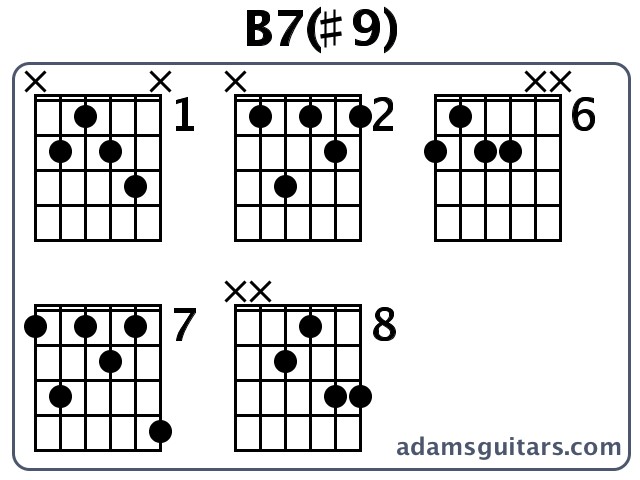
Two keys to comfort: keep your wrist relaxed and angle your hand slightly so the pinky lands cleanly on the 1st string. If your pinky collapses, scoot your elbow forward a touch—this changes the attack angle and usually cleans things up.
Clean tone checklist (takes 60 seconds)
- Pick each string slowly from 5 to 1. If a note is dead, press closer to the fret and lighten your grip. Death grip bends notes sharp and tires your hand.
- Check the 6th string. If it rings, tweak your middle finger so its tip just kisses that string.
- Strum softly, then hard. The chord should survive both dynamics without buzzing.
Fast transitions you can actually use
Most of your struggle won’t be the shape—it’ll be moving into it on time. Use these pivots and you’ll shave weeks off the learning curve:
- E to B7: Leave your index hovering above the 4th string while you lift E. Plant the middle finger first (5th string, 2nd fret), then drop index, ring, pinky in one motion. Think “anchor then cluster.”
- Em to B7: Same idea as above, but you have more fingers free. Lead with the middle as the anchor.
- A to B7: Train a small “roll”—ring finger comes off A and lands on the 3rd string 2nd fret while your middle simultaneously finds the 5th string 2nd fret. Pinky last.
Two micro-drills (30 seconds each)
- Plant order: middle (5), index (4), ring (3), pinky (1). Do it five times, eyes closed if possible.
- Mute control: Strum down-up while lightly touching the 6th string with your middle finger tip. You should hear no low E rumble.
Rhythm that makes B7 sound like music
B7 shines with groove. Try this progression at 80–100 BPM: | E | A | E | B7 A | E |. Play a light shuffle: down (long), up (short), down (long), up (short). Add a tiny palm mute at the bridge.
Want a backing track to lock in? Use the loop below for two minutes of focused practice. Strum simple first, then add accents on the “and” of two and four.
Make it musical: tiny licks inside the chord
- D# hammer-on: Strum from strings 5–2 with the index floating off the 4th string, then hammer the 1st fret (D#). It’s a classic bluesy move.
- Top-string twang: Pick string 1 (F# with pinky), then strum the full chord. Great for turnarounds.
- Walking bass: From E, play 6th string open (E), 6th string 2nd fret (F#), then land on B7 and hit 5th string 2nd fret (B).
A simple one-chorus study
Play this slowly and aim for even timing:
| E (2 bars) | A (1 bar) | E (1 bar) | B7 (1 bar) A (1 bar) | E (2 bars) |
- Bar 1: E, gentle down-strums
- Bar 2: E, add a light upstroke after beat 2
- Bar 3: A, palm-muted
- Bar 4: E, open and ringing
- Bar 5: B7, accent beat 2; Bar 6: quick A
- Bars 7–8: E, finish with a soft rake
Common problems and quick fixes
- Buzzy 4th string: Your index is likely too flat. Curl more and move closer to the fret wire.
- Painful pinky: Micro-adjust your wrist forward 1–2 cm. If tension persists, practice pinky-only taps on string 1, 2nd fret, for 20 seconds between reps.
- Rogue low E string: Increase the mute contact with your middle finger or lightly drape the fretting-hand thumb across the 6th string.
- Slow transitions: Count “1‑and‑2‑and‑3‑and‑4‑and.” Start moving on the “and” of 4 from the previous chord so you land on 1 with B7.
One-week plan (10–15 minutes a day)
- Day 1 – Shape and sound: 5 minutes of slow planting (middle, index, ring, pinky). 5 minutes of clean-pick check, two passes per string.
- Day 2 – E to B7: 2 minutes hand-only (no strumming), then 6 minutes alternating 2 beats of E, 2 beats of B7 at 70–80 BPM.
- Day 3 – Rhythm: Use the shuffle feel over E–A–E–B7 A–E. Keep the right hand moving even if the left hand flubs.
- Day 4 – Licks inside the chord: Add the D# hammer-on and the top-string twang. Record a 30‑second clip to hear noise you don’t notice in the moment.
- Day 5 – Transitions at tempo: Bump to 90–100 BPM. Focus on landing on beat 1 with no extra strings ringing.
- Day 6 – Turnaround flavor: In a 12‑bar in E, hit B7 on bars 9 and 10, then a quick A or B7 in the turnaround. Aim for clarity over speed.
- Day 7 – Performance rep: Two clean playthroughs of the study progression, then one improvised minute where you throw B7 anywhere the ear wants tension.
Finger economy: the secret to speed
Watch your hand while switching into B7. If your ring finger travels far, it’s stealing time from your pinky. Keep fingers close to strings (“hover” zone) and let the middle act as the early-arriving anchor. Your goal isn’t to move faster; it’s to move less.
Upgrade paths once B7 feels easy
- B7sus4: Add your pinky to the 2nd string 2nd fret while holding B7, then release. Instant suspense and release.
- 7#9 vibe (Jimi flavor): In E blues, use quick fills on the top strings over B7, bending the 3rd string slightly for grit.
- Barre alternative: Try B7 at the 2nd fret with a partial barre for songs that need a tighter, less ringy sound.
Ear training: feel the resolution
Strum B7, count four beats, then land on E. Notice the relief? That’s function. Sing the top note (F#) while you hold the chord, then sing down to E when you switch. Training your ear to crave that move will make your rhythm choices feel natural, not memorized.
Final checklist
- Every note rings cleanly, and the low E is reliably muted.
- You can move from E to B7 in under a beat at 90 BPM.
- You can add at least one embellishment (hammer-on or top-string twang) without losing time.
- In a short progression, you instinctively use B7 to build and E to release.
Give this plan a week, and the chord that used to feel awkward will become the one you reach for to make simple progressions sound finished. Keep the touch light, the motions small, and the groove steady—B7 will do the rest.
